
Complete Resource on What Is an Employer of Record (EOR)
Key Takeaways
- EORs let companies hire internationally without setting up a local entity, removing a major barrier to global expansion.
- They take full legal responsibility for employment, including compliance, payroll, taxes, and benefits.
- Using an EOR significantly reduces risk related to labor law violations, misclassification, and termination errors.
- Companies can expand into new markets faster, often within days instead of months.
- EORs provide access to a global talent pool while keeping operations lean and cost-efficient.
- Compared to alternatives like PEOs or entity setup, EORs offer a more flexible and scalable solution for international hiring.
Expanding into new markets is exciting, but the legal and operational challenges of hiring talent across borders can quickly delay momentum. That’s where an Employer of Record (EOR) comes in. Instead of juggling payroll laws, compliance risks, and entity setup, businesses can rely on an EOR to legally employ workers on their behalf, allowing them to stay focused on growth.
This guide breaks down what an EOR is, how it compares to alternatives, and why it’s become the must-have tool for companies wanting to scale globally.
What Exactly Is an Employer of Record?
Understanding the Legal Side of Hiring Globally
When you hire employees in another country, EOR services manage all the legal aspects like handling taxes, social security payments, and employee benefits. With EORs taking care of these, you can focus on growing your business without stressing over legal issues.
How an EOR Structure Works
EORs work hand-in-hand to manage your employees. While you're in charge of employees' day-to-day tasks, the EOR handles the legal side and ensures everything complies with local labor laws in the background.
Real Example: Hiring Abroad Without a Local Entity
For example, if a U.S. tech startup wants to hire a designer in Poland, it can do so through an EOR. This way, they can easily expand their team internationally without setting up a local office.
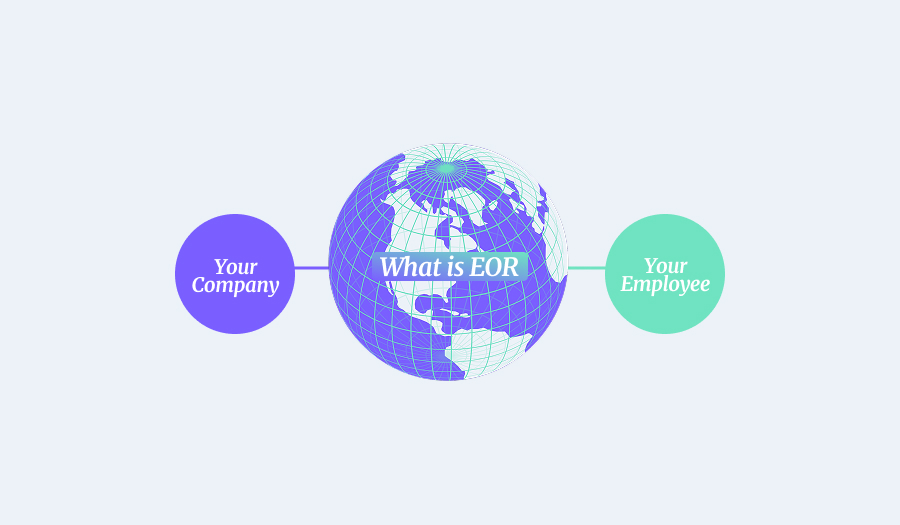
An EOR acts as the legal employer so you can hire globally without the burden of setting up and managing a local entity.
Core Responsibilities of an EOR
While services vary by provider and country, here are the most common functions:
Managing Local Compliance
Each country has unique employment laws. EORs stay up to date with regulatory changes, ensuring contracts, pay, and benefits comply with local labor standards.
Payroll and Benefits Administration
From running payroll in local currency to providing mandatory benefits such as health insurance or paid time off, EORs handle all administrative paperwork and filings.
Smooth Onboarding and Offboarding
EORs handle everything related to hiring and termination. This includes ensuring new employees are correctly set up, obtaining tax IDs, and handling contract terminations in accordance with local laws.
Reducing Employment Risk
EORs help lower the chances of problems like misclassifying employees, making mistakes with terminations, or missing tax deadlines, which can result in fines and harm to your company’s reputation.
From compliance to payroll, an EOR handles the complexities of employment so you can focus on running your business.
Why Companies Choose an EOR
Speed and Efficiency in Expansion
With the help of an EOR, companies can enter new markets in just days, instead of taking months to set up an international office.
Save Big on Costs
Starting a new company can be really expensive with all the legal, tax, and HR fees, often costing hundreds of thousands each year. EORs offer a cheaper and more flexible solution.
Easy Compliance
EOR services can simplify the whole process for you, as understanding the local laws can be confusing.
Access to Global Talent
EORs help companies hire the best people from around the world, helping build diverse teams and fill skill gaps, even in competitive job markets.
Speed, cost savings, and access to global talent make EORs a practical solution for modern expansion.
EOR vs. Other Hiring Solutions
EOR vs. PEO
EORs take on all the legal responsibilities of employment, which makes them perfect for hiring internationally, where you might not have a local presence. On the other hand, PEOs share those responsibilities with you.
EOR vs. Staffing Agencies
Staffing agencies help you find candidates for your open jobs, while EORs handle HR tasks like contracts, payroll, and compliance once someone is hired.
EOR vs. Setting Up a Foreign Entity
Setting up a branch overseas can have complicated processes and also be expensive. Using an EOR is usually a simpler and more cost-effective alternative.
The key difference is control and liability. EORs assume full legal responsibility, making them ideal for international hiring.
Real-World Examples
Startups Scaling Engineering Teams
Many tech startups use EORs to hire developers from places like Mexico City or Eastern Europe without the hassle of legal paperwork.
Nonprofits and NGOs Hiring Locally
Nonprofits rely on EORs to hire employees in emerging markets where they don't have offices but need a local team.
Enterprises Testing New Regions
Larger companies use EORs when testing out new regions for potential business expansion.
Companies across industries use EORs to scale teams, enter new markets, and hire talent without borders.
How to Choose the Right EOR Partner
When evaluating providers, do these tasks:
Confirm Country Coverage
Ensure the EOR operates in the regions where you plan to hire. Global providers simplify multi-country hiring through a single system. Choose a provider that not only has a presence in multiple countries but also covers the entities and has actual expertise in each country.
Review Platform Capabilities
Choose an EOR with a digital platform for contract management, reporting, and payroll tracking to reduce manual errors. Some providers offer in-house HR support and their own ATS.
Check Support and Transparency
Look for providers that offer responsive HR support, transparent pricing, and a reputation for compliance accuracy. Choose an EOR service that provides direct 24/7 support already included in your plan without extra fees.
Evaluate Scalability
If your team grows quickly, make sure that your partner EOR can easily expand into new countries and also manage payroll in different currencies. Some EOR providers actually outsource their payroll services and also charge extra costs per additional employee, so pick one that allows you to add new employees without any hassle.
The right EOR partner should combine strong local expertise with transparent pricing and scalable support.
FAQs
- What is an Employer of Record (EOR)? An EOR is a third-party organization that legally employs workers on behalf of a company, handling compliance, payroll, taxes, and HR administration.
- Do I still manage my employees if I use an EOR? Yes. You manage day-to-day work and performance, while the EOR handles legal employment responsibilities.
- Is using an EOR legal? Yes. EOR services operate within local labor laws and are designed specifically to ensure compliance in each country.
- How fast can I hire through an EOR? In many cases, hiring can be completed in a few days, depending on the country and role.
- What’s the difference between an EOR and a PEO? An EOR becomes the legal employer, while a PEO shares employment responsibilities with your company and usually requires you to have a local entity.
- Is an EOR cost-effective? Yes. It eliminates the need for entity setup, legal fees, and ongoing administrative costs, making it a more efficient option for global hiring.
- Can startups use an EOR? Absolutely. Startups often use EORs to scale quickly and test new markets without heavy upfront investment.
The Bottom Line
EORs are not just a way for you to stay compliant; they also help your business scale across different countries. They make it a lot easier to hire internationally, tap a wider talent pool, and ensure that you're staying compliant with local labor laws.
If your company is exploring new markets or wants to test global hiring without heavy upfront investment, an EOR could be your fastest path forward.
Want to explore flexible hiring options without the complexity? Sign up for the free beta with Olamee and see how global hiring can be simplified for your business.
References & Further Reading
- World Bank – Doing Business Indicators
- SHRM – Global Employment Compliance
- Harvard Business Review – The Future of Remote Work
- National Association of Professional Employer Organizations (NAPEO)
- OECD Employment Policies Database